
What Is TDS in Water? (And Why It Matters More Than You Think)

You've probably seen the term "Total Dissolved Solids" on a mineral water label and wondered what it actually means. Is higher better? Does it affect taste? And why should you care about the mineral content of your water in the first place?
The truth is, TDS is one of the most important indicators of water quality and understanding it can transform the way you think about hydration.
At Sorgente Sant'Elena, we bottle two Natural Mineral Waters from Chianciano Terme: Acqua Sant'Elena (451 mg/l TDS) and Acqua Marzia (1,372 mg/l TDS). Both are mineral waters, but they serve different purposes based on their mineral composition. This guide will explain exactly what TDS means, how minerals enter water naturally, why mineral-rich water offers superior bioavailability compared to food and supplements, and how to choose the right water for your lifestyle.
Let's start at the beginning.
What Is TDS?
Total Dissolved Solids (TDS) refers to the combined content of all inorganic and organic substances dissolved in water. In Natural Mineral Water, TDS primarily consists of minerals like calcium, magnesium, potassium, sodium, bicarbonates, sulphates, and chlorides.
TDS is measured in milligrams per litre (mg/l) or parts per million (ppm), these terms are interchangeable (1 mg/l = 1 ppm).
When you see "Fixed Residue at 180°C" on a water label, that's another way of expressing TDS. This measurement represents the solid residue left behind after water is evaporated at 180°C. It's a direct indicator of mineral content.
Why TDS Matters
TDS tells you two things:
The mineral density of your water - Higher TDS means more dissolved minerals.
The water's potential health benefits - Different minerals support different bodily functions.
Water with very low TDS (like distilled or reverse osmosis water) has been stripped of minerals and doesn't provide the nutritional value that Natural Mineral Water offers. Conversely, water with high TDS delivers substantial quantities of bioavailable minerals with every sip.
How Do Minerals Get Into Water?
Natural Mineral Water isn't created in a laboratory, it's shaped by nature's geology over decades, sometimes centuries.
Here's how it works:
1. Rainwater Infiltration
The process begins when rainwater falls and seeps into the earth. As it percolates through layers of soil and rock, it begins its slow journey toward underground aquifers.
2. The Aquifer: Nature's Filter and Mineraliser
As water travels through geological strata, limestone, volcanic rock, clay, and mineral-rich sediment, it dissolves trace amounts of minerals from these formations. The type of rock, the depth of the aquifer, and the time water spends underground all influence the final mineral composition.
For example:
Calcium and magnesium come from limestone and dolomite rock.
Sulphates are often found in volcanic regions or gypsum deposits.
Bicarbonates form when carbon dioxide in water reacts with carbonate minerals.
3. Protection and Bottling at Source
Once the water reaches a protected aquifer, it remains untouched by surface pollutants. In Chianciano Terme, our springs emerge naturally from underground sources. Acqua Sant'Elena flows from a natural cave, first mentioned in 1756. Acqua Marzia was discovered in the 1990s at the Sant'Elena thermal park.
Both are bottled directly at source, preserving their natural mineral composition without alteration. This is what distinguishes Natural Mineral Water from treated tap water or purified bottled water.
Why Minerals in Water Are More Bioavailable Than Food or Supplements
Here's the point that most people miss: minerals dissolved in water are absorbed faster and at least as well as those from food or supplements.
Bioavailability refers to how much of a nutrient your body can actually absorb and use. Research shows that minerals in natural mineral water offer several absorption advantages:
Ionic State: Minerals in water are dissolved in a free ionic form, meaning they're already broken down and ready for absorption. Research has shown that waterborne magnesium is absorbed approximately 30% faster than magnesium from food. (2,3)
No Digestive Breakdown Required: Unlike food-bound minerals, water-dissolved minerals don't need to be broken down by digestive enzymes before absorption. (2,3)
Rapid Uptake: Liquid minerals can be absorbed through the stomach lining and small intestine faster than solid forms. (2,3)
Choosing the Right TDS for You
Both of our waters come from Chianciano Terme, but they serve different purposes based on their TDS and mineral profiles.
Sant'Elena
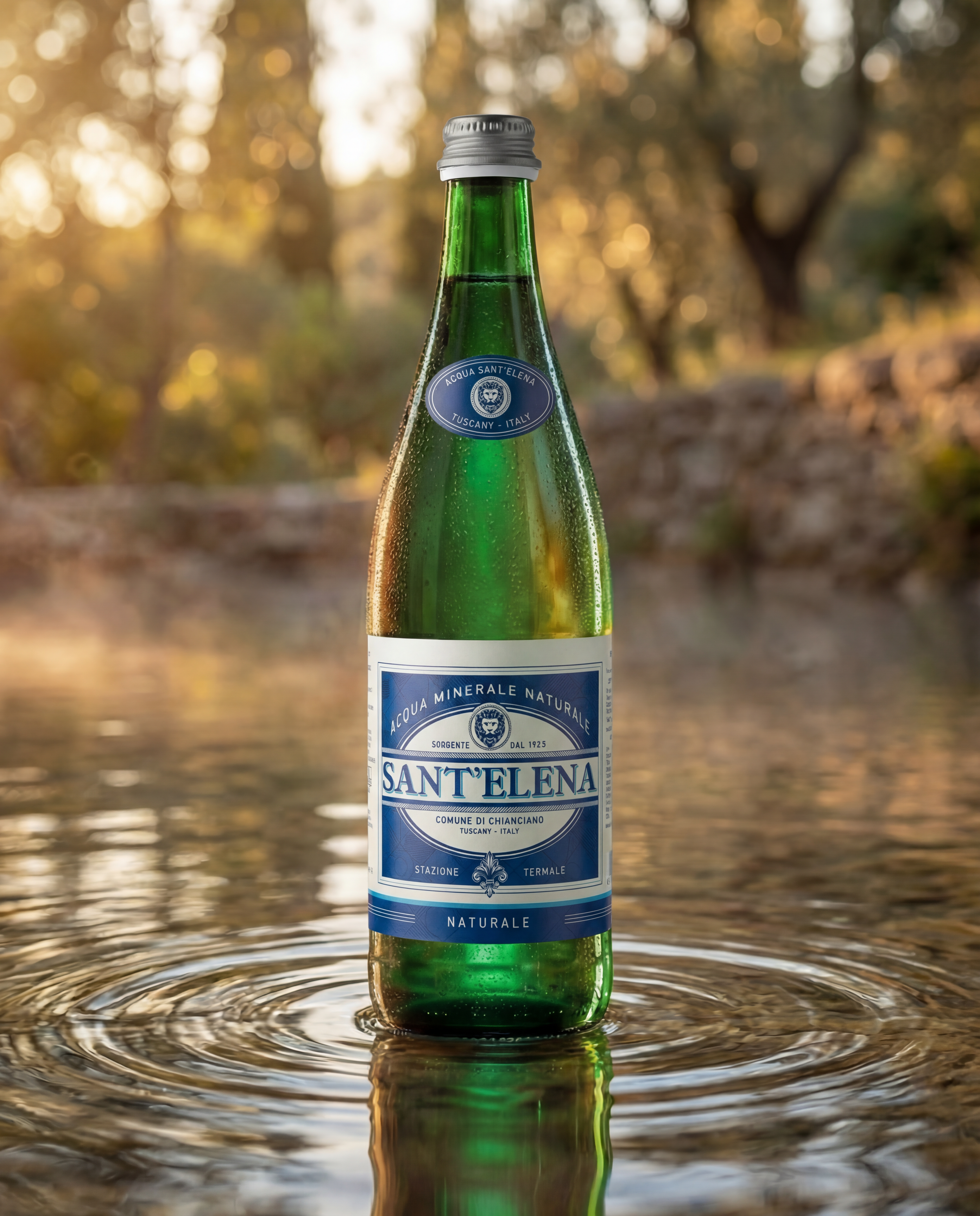
TDS: 451 mg/l
pH: 7.4 (neutral, matches blood pH)
Calcium: 140 mg/l
Magnesium: Moderate
Classification: Oligomineral (Low mineral)
Who It's For:
Daily hydration without a heavy mineral load
Those seeking pH balance and gentle kidney support
People who prefer a lighter, more neutral taste
Anyone looking for the heritage of Tuscany's original spring (since 1756)
Marzia
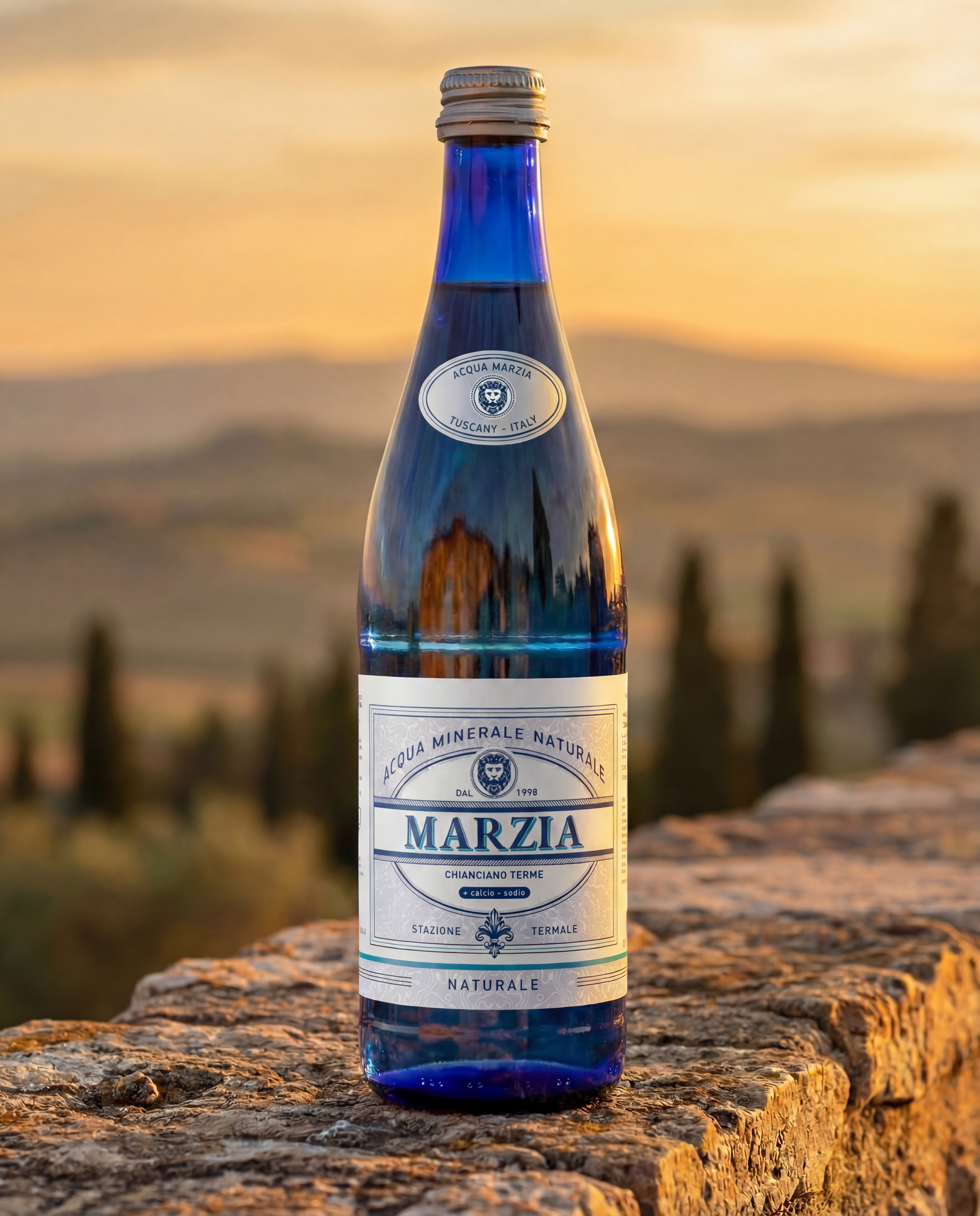
TDS: 1,372 mg/l
pH: 6.7 (neutral-acidic properties)
Calcium: 315 mg/l
Magnesium: 100 mg/l
Bicarbonate: 571 mg/l
Sodium: 13 mg/l (very low)
Nitrate: 1.1 mg/l (exceptionally low)
Classification: High Mineral (Rich in Salts)
Who It's For:
Active individuals and athletes needing mineral replenishment
People looking for digestive support (sulphates and bicarbonates)
Anyone wanting a fuller-bodied, mineral-dense water
How to Read a Water Label
Now that you understand TDS, here's what to look for on any mineral water label:
Fixed Residue / TDS (mg/l): The total mineral content.
Calcium (Ca²⁺): Helps to supports bone health, muscle function, nerve transmission.
Magnesium (Mg²⁺): Aids recovery, reduces stress, supports energy production.
Sodium (Na⁺): Important for hydration, but those on low-sodium diets should check this value.
Sulphate (SO₄²⁻) and Bicarbonate (HCO₃⁻): Support digestive health and help balance stomach acidity.
Nitrate (NO₃⁻): Lower is better, high nitrate levels can indicate pollution. Marzia's 1.1 mg/l is exceptionally low.
pH: Indicates acidity or alkalinity. Neutral is around 7.0; Sant'Elena's 7.4 matches human blood pH.
Understanding these values allows you to choose water based on your body's needs, not just marketing claims.
TDS Is Your Water's Fingerprint
Total Dissolved Solids is a snapshot of a water's geological journey, mineral richness, and potential health benefits.
At Sorgente Sant'Elena, we're proud to offer two distinct waters from Chianciano Terme:
Acqua Sant'Elena (451 mg/l): The heritage choice. Light, balanced, pH-perfect for everyday hydration.
Acqua Marzia (1,372 mg/l): The functional choice. High in calcium and magnesium, designed for active life and wellness.
Whether you're seeking gentle daily hydration or mineral-dense functional water, understanding TDS helps you make an informed choice.
Because hydration isn't just about drinking water, it's about drinking the right water.
References
1, World Health Organisation (2003). Total Dissolved Solids in Drinking-water: https://www.who.int/docs/default-source/wash-documents/wash-chemicals/total-dissolved-solids-background-document.pdf
2, Azoulay, A., Garzon, P., & Eisenberg, M.J. (2001). Comparison of the mineral content of tap water and bottled waters. https://link.springer.com/article/10.1111/j.1525-1497.2001.04189.x
3, Sabatier, M., Arnaud, M.J., Kastenmayer, P., et al. (2002). Meal effect on magnesium bioavailability from mineral water in healthy women. https://www.sciencedirect.com/science/article/pii/S0002916523060951?via%3Dihub
Verhas, M., et al. (2002). Magnesium bioavailability from mineral water: A study in adult men. https://www.nature.com/articles/1601333
4, Greupner, T., Schneider, I., & Hahn, A. (2017). https://www.tandfonline.com/doi/full/10.1080/07315724.2017.1299651#abstract